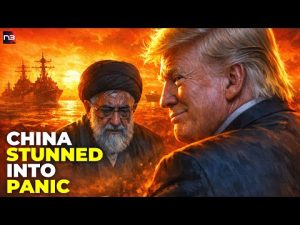
As the world watches with bated breath, the tensions in the Strait of Hormuz are reaching a boiling point. It’s the modern-day political equivalent of a soap opera, and it’s clear that Iran’s leadership is auditioning for the role of antagonist. Blocking the vital waterway with threats and extortion was a bold move—one might say strategically reckless—which has now backfired spectacularly. President Trump, never one to shy away from the dramatic, has turned the tables and issued a total blockade on Iranian ports. Iran’s economy, already teetering on the edge, now looks set to collapse entirely. The country is virtually cut off from global markets, with its oil industry gasping for life like a fish floundering on dry land.
The Iranian regime, meanwhile, remains stubborn as ever, clinging to their nuclear ambitions like a child clutching a favorite toy. The world, if it weren’t so serious, might find this stubbornness almost endearing. But alas, it is far from amusing. The U.S. demands are straightforward: no enriching uranium and, by all means, no nuclear weapons. It seems like an easy compromise for any rational actor, yet Iran refuses to play ball. One can only wonder if the leadership there has been swapped out for a particularly obtuse set of garden gnomes. Given the straits they find themselves—quite literally—one might think a bit of pragmatism would prevail.
Adding a pinch of salt to the wound, over 100 oil super tankers have been bravely diverted to the Gulf of America. These vessels are set to fill up with the finest Texas crude, no doubt putting the boot into Iran’s economic woes. It’s an economically savvy move and one that places America firmly in the driver’s seat of this geopolitical Grand Prix. Meanwhile, the Iranians seem determined to clutch at their nuclear ambitions like they’re holding onto a security blanket. It’s a bewildering game of brinkmanship served with a side of economic disaster.
One might argue Iran’s leaders are drawing inspiration from a tragic Greek play, determined to see their homeland’s economy crumble rather than reach an agreement on what’s basically a laundry list of reasonable demands. The blockade of the Strait of Hormuz, meant to be a demonstration of power, looks more like a showcase of strategic ineptitude. The world is left shaking its head in disbelief at this death-defying, rather suicidal, commitment to nuclear aspirations and international waterway shenanigans.
In closing, one can’t help but marvel at the sheer audacity of Iran’s geopolitical performance. It serves as a stark reminder that international diplomacy is not for the faint of heart—or, seemingly, the particularly rational. The U.S. continues to lead with a resolute stance, humorously emphasizing that no deal will be struck unless Iran agrees to give up the nuclear theatrics. If nothing else, this ongoing saga showcases the art of political chess played out on the global stage—a blend of comedy, drama, and, occasionally, a touch of absurdity all rolled into one.