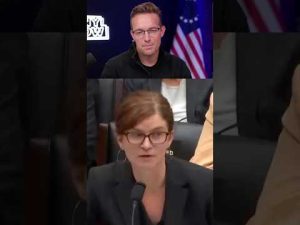
In a world where common sense seems to be in short supply, one would expect leaders of our nation to at least have a grip on history. Unfortunately, reality often delivers quite the opposite spectacle. Recently, Ilhan Omar, a sitting member of Congress, misspoke and referred to a law having been used during “World War Eleven”—clearly an incorrect reference, as the World War series in history concludes with World War II, or World War “Two.”
Mistakes happen. No one is flawless, and public speaking is fraught with opportunities for error. But a blunder of this magnitude is not only embarrassing, it’s revealing. It exposes a fundamental misunderstanding of, or complete indifference to, basic historical knowledge that should be second nature to anyone who has the privilege and responsibility to legislate for our nation. It’s the sort of mistake that makes one wonder if she also thought The Godfather Part II was the eleventh movie in the franchise or if she’s endlessly searching Netflix for all those unwritten Star Wars episodes.
What’s at stake here isn’t just a humorous slip-up or an amusing gaffe to be laughed off. It underscores a much deeper issue: the caliber of individuals being elected to positions of power and the kind of ideology they bring with them. Omar’s lapse is emblematic of a troubling cognitive dissonance that pervades the progressive thought—it seems to prioritize feelings over facts, asserting that diversity is our greatest strength without acknowledging the unifying cultural and historical fabric that truly binds a nation.
Contrast this with the recent actions of the Trump administration, which seems to understand that America’s greatness is drawn from a coherent cultural narrative. This leadership acknowledges our roots and the values that shaped our nation long before it became a symbol of liberty for the world. Indeed, America was founded on shared cultural principles brought by those with a particular vision—a legacy that leaders must understand and respect if they are to guide this country wisely.
While progressives may chafe at the notion of heritage, it’s clear that common values and historical understanding are more than just nostalgic sentiments. They are cornerstones that provide stability and identity, which is precisely what America needs rather than a mishmash of misinformed ideologies. After all, when it comes to leadership, our nation deserves lawmakers who understand what they’re talking about, lest we find ourselves governed by those who think world history resembles a poorly edited science fiction saga.