Tensions in the Middle East have taken another turn, as President Trump announced a pause in military actions against Iran. This decision, according to Trump, comes after requests from Iran and other Middle Eastern nations. However, the Iranian regime has denied making such a request, stating that it was never their idea to back off. The situation is as tangled as a cat playing with a ball of yarn, and it appears that the diplomatic ball is still bouncing around.
With the promise of a deal hanging in the air, Trump emphasized the need for a quick resolution, which centers on two major issues: the opening of the Strait of Hormuz and the elimination of Iran’s nuclear threats. Trump has stated that Israel, a key ally in the region, stands with the United States in pursuing these goals. Yet, amid these promises and negotiations, reports indicate that Israel has raised its military alert levels, as fears surrounding Iran’s potential aggressiveness continue to loom over the area.
People in the U.S. embassies scattered across the Middle East have been urged to evacuate or remain on standby for flight cancellations, which creates a sense of urgency that can’t be ignored. It seems the clouds of potential conflict are brewing, and it’s best for Americans in the region to keep their bags packed and travel documents handy.
Adding to the complexity is Iran’s foreign minister, who issued a stern warning to the United States. He listed several countries that Iran would retaliate against if U.S. strikes were to hit Iranian civilian infrastructure. Included in this list are key allies like Qatar and Saudi Arabia, which complicates the geopolitical chess game even further. Here’s where it gets tricky—on one hand, Iran is claiming to negotiate, while on the other, they’re ready to unleash their displeasure at anyone who even hints at a U.S. military offensive.
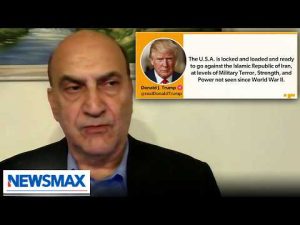
Trump, ever the bold leader, remarked that America stands “locked and loaded.” This statement indicates that while negotiations are ongoing, the U.S. military presence in the region remains preparedness-ready. Critics warn that constant back-and-forth could lead to an escalation of conflict, but Trump and his advisors believe it’s essential to display strength in these types of negotiations. It’s a classic case of the age-old adage: if you want to negotiate, you have to be prepared to throw a few punches, metaphorically speaking, of course.
As this situation continues to develop, many in the conservative circles wonder how the U.S. should proceed. Some argue for increasing pressure on the Iranian regime, stating that a strong stance coupled with strategic moves could destabilize Iran’s hold on power. Others believe that sending an overwhelming message could awaken a more significant uprising among the Iranian people, who have long dealt with the burdens placed on them by their government. Whatever the outcome, one thing is certain—the tension in the region is anything but resolved, and the stakes remain incredibly high for all involved.