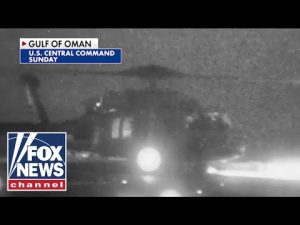
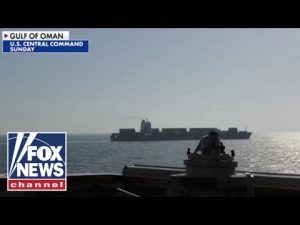
In the midst of the world stage’s chaotic drama, the ongoing tension between the United States and Iran seems to have reached a fever pitch. The latest buzz comes from a confrontation that unfolded in the Strait of Hormuz where a U.S. Navy guided missile destroyer put a rather definitive punctuation mark on its exchanges with an Iranian cargo ship. It seems six hours of fruitless attempts at persuasion resulted in creating a gaping hole in the ship’s engine. One might say this was America’s way of expressing that “silence speaks louder than words,” except, of course, it wasn’t all that silent.
President Trump, never one to mince his words, has thrown down the gauntlet in no uncertain terms via his favored platform, Truth Social. The message was simple: agree to the deal, or face the obliteration of every bridge and power plant in Iran. It’s a classic example of “playing nice” in international diplomacy, where the carrot is followed swiftly by a rather large stick. The President’s message goes to show that when it comes to Iran, there seems to be a shortage of patience stateside, and a growing stockpile of missile-destroyers on the water.
With Iran threatening retaliation for what it labeled as “armed piracy,” the world waits with bated breath to see if talk of the next round of ceasefire negotiations is serious or merely theatrical bluster. As reported by analysts, the Iranian regime, much like a ghost in a poorly written mystery novel, is elusive—hidden deep underground and seemingly communicating via slipped notes. It’s as if they’ve taken a page out of Harry Houdini’s book: The art of disappearing to leave everyone guessing.
Meanwhile, U.S. military sources anticipate more face-offs in the future. After all, if Iran continues its high-seas Houdini act, America seems willing to play the part of the persistent maritime traffic cop. The blockade isn’t a symbolic gesture; it’s a tight squeeze on Iran’s economic lifeline, which, frankly, needs a trim. By strategically blocking oil transport, they say it’s all about nudging Iran toward the negotiation table. Of course, what they’ll find there might be anyone’s guess.
In less reassuring developments, Hezbollah, never content to be spectators, decided to crash the Middle East’s ongoing fireworks display with an attack on Israeli forces in southern Lebanon, all while existing ceasefires play tug-of-war. As the clock ticks on these ceasefire talks, which might or might not happen, one is left to wonder if peace might someday thread its way through the intricate layers of strategy, albeit with a flash and a bang. Until then, it’s a continuing saga, and all are left to speculate on which act comes next.