In the ever-tumultuous saga of the Strait of Hormuz, President Trump has once again floated a rather peculiar yet ambitious idea: turning the United States into a sort of “guardian angel” for the region, collecting tolls like a highway manager. This proposal surfaces amidst continued tensions with Iran, whose attempts to exert control over the strait have been met with firm U.S. resistance. Much like a persistent mosquito that doesn’t comprehend it’s up against a swatter, Iran seems keen on creating chaos, though their actual control remains about as substantial as cotton candy in a rainstorm.
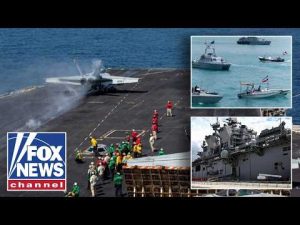
While Iran continues its theatrical posturing, the U.S. Navy has answered with a show of force that would make even the boldest shippers breathe a sigh of relief. Ships are sailing through the strait again, albeit in fewer numbers than before, but it’s undoubtedly progress. With Operation Epic Fury underway, it’s as if the U.S. has pulled back the curtain on Iran’s meddling and declared, “The show is over, folks.” The presence of American firepower—from aircraft carriers to fighter jets—demonstrates that the U.S. is not about to let Iran turn this crucial waterway into a toll plaza for the world’s energy supplies.
Secretary Chris Wright and national security analyst Dr. Rebecca Grant are singing from the same hymn sheet, praising the restoration of traffic in the Strait of Hormuz and asserting that Iran’s antics won’t hold the world to ransom. The message is crystal clear: Iran can either behave or face the modern equivalent of getting grounded—no nuclear program to play with, no toll revenues to dream about. If Iran hopes for even a glimmer of economic reward, they’ll need to stop acting like that one kid in class who throws spitballs yet expects a gold star for attendance.
Internationally, it seems other nations are willing to lend a hand—or at least sign some paperwork—hinting at a broader consensus to keep the strait open and secure. The British and French have drafted a plan and brought some naval support of their own, bolstering the U.S. efforts. However, it still feels much like a production with the U.S. firmly in the director’s chair, while other nations play their supporting roles, making cameo appearances as needed.
The looming question remains whether Iran is genuinely attempting to bargain in good faith or simply stalling for time, banking on political winds to shift in their favor after the U.S. midterm elections. But, as Dr. Grant points out, the leverage remains squarely in the hands of the U.S., with Iran’s nuclear ambitions squelched and its economy teetering from sanctions. Perhaps it’s high time Iran realized that in the high-stakes game of geopolitical chess, they’ve just been checkmated by a resolute American strategy. In the end, the clear takeaway is that the Strait of Hormuz will sail on—as open waters for all—while Iran redefines the term “bystander.”