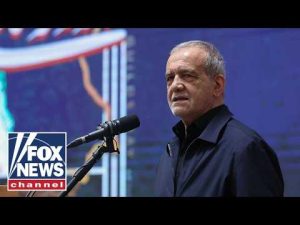
In the latest act of international theater, the geopolitical stage has spotlighted the United States and Iran once again. General Jackeen, with all the seriousness one might expect from someone with a front-row seat to this unfolding drama, suggests that the Strait of Amuse isn’t going to be relinquished without a display of force. Clearly, diplomacy and economic elbow-nudging aren’t impressing the folks on the other side of the globe any more than an off-Broadway play might captivate a serious theatrical critic. It’s all about making a scene, and Iran seems intent on stealing this show.
President Trump’s strategy, as outlined in a candid chat with Axios, involves some serious low-key action. This, of course, is a clever way to say they’re squeezing Iran until it starts to feel the pinch where it truly counts—its wallet. As the president subtly hints, this economic pressure comes without disarming the military possibilities. It seems that if any military moves are planned, they’ll pop up like a surprise plot twist. Who doesn’t love a bit of suspense in international relations?
Enter JD Vance, taking the spotlight to explain the intricate dance of squeezing oil and gas out of the Middle East so Americans can keep enjoying their road trips without gas station anxiety spirals. He makes it sound as simple as pulling a rabbit out of a hat. But with American public opinion split on the idea of military action—not completely sold on another overseas adventure—it’s a juggling act worthy of a Vegas performance.
Oil prices are performing their own dance, hovering somewhere around the $80 mark after a brief stint at $75. It isn’t a Broadway finale, but it’s a number that isn’t raising too many eyebrows either. Reports say a respectable amount of oil is flowing through the Strait and land routes, though some might argue it’s a far cry from the pre-war levels. The American audience seems comfortable enough with the current supply to not demand a refund, at least for now.
And if that wasn’t enough, the Israeli drama adds another layer of complexity. With Benjamin Netanyahu firmly rejecting a peace plan, it’s clear he’s not ready to call it a wrap on the Gaza tensions. The radicalization of Hamas is the antagonist in this script, and Israel isn’t about to curtain-call until there’s a serious rewrite. It’s a reminder that sometimes the simplest solution—like just ending the hostilities—isn’t in the cards, especially when trust is thinner than a theater prop.
In this intricate web of politics, oil, and military strategy, one could only hope for some semblance of resolution. But why would there be? As with all good dramas, the more complex the story, the more riveting the spectacle. At the heart of it all, economic sanctions and military maneuvers continue to play their parts, while the audience waits, popcorn in hand, for the next act to unfold.