For three nights running, the United States has taken to the skies over Iran, leaving a blazing trail of precision airstrikes in its wake. As glitzy fighter jets and naval ships peppered the region with formidable firepower, one thing is clear: America means business, and it’s not interested in tiptoeing around a regime that’s played diplomatic hardball for far too long. It seems the script has flipped, and Iran, despite its bravado, is finding itself increasingly cornered by a blockade that unequivocally spells economic squeeze.
The United States, not known for its patience when poked one too many times, is back to flexing its military might. Deploying not just traditional aerial warfare but also sea drones that single-handedly remind adversaries of an old Clint Eastwood line, “Go ahead, make my day.” There’s a bit of Texan ingenuity there as well, with sea drones manufactured in Texas now playing a starring role in oceanic operations. America is predictably controlling the Strait of Hormuz, ensuring that the world’s oil can flow unhindered, except perhaps for Iran, whose diplomatic rulebook seems to have been thrown out the window.
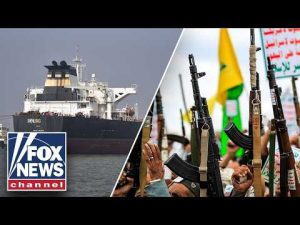
The simmering tensions reached a boiling point due to Iran’s habitual overstepping, demonstrating a remarkable consistency in disregarding agreements. They breached a memorandum not to antagonize commercial tankers and decided instead to test the waters—literally and figuratively. It’s been like watching a poorly orchestrated play where the actors, once staunchly uniform in their roles, now splinter under external pressure. The Iranian leadership seems on the brink of a comical unraveling, a consequence of a fractured regime buckling under its own contradictions.
Meanwhile, the White House, far from exhibiting any sign of retreat, hints at tightening the noose further if the need arises. The possibility of taking strategic holdings like Car Island is entertained, but boots on Iranian soil are not yet part of the Pentagon’s choreography—at least not overtly. The administration’s approach bears an uncanny resemblance to a high-stakes poker game, holding onto aces while fancying a peace deal without conceding too much.
Back at home, the president is also scoring points on the economic front as gas prices drop, a timely boon in the shadow of these international maneuvers. By maneuvering against Iranian revenues and rekindling a blockade, the administration is steering the conversation towards an American victory not just on the battlefield but in the energy markets too. The echo in the corridors of Washington seems one of assuredness; they’ve decided that enough is enough, and the time for half-hearted negotiations and leniency has dusk written all over it.
In a geopolitical climate where actions often speak louder than words, Iran finds itself at a crossroads. America’s message is as clear as a bugle at dawn: Play by our rules, or don’t play at all. Watching from a distance, one might think that outmaneuvering Iran isn’t just a military goal but a resolution, because when you’re the world’s strongest military, walking softly is so passé.