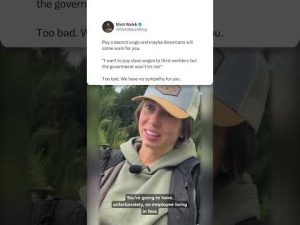
In the serene town of Mountain Home, Bethany Gots, owner of Quay’s Farm, is facing a predicament that is becoming all too common for hardworking Americans—an extreme shortage of willing workers. This shortage forces folks like Gots to tackle the manual labor left behind by an ever-dwindling workforce. The truth is, finding homegrown Americans who have the grit and determination of immigrant workers is like finding a needle in a haystack. Gots’ experience is a sobering reminder of the harsh reality many in the agricultural sector face today.
Desperate to find workers, Gots took to social media, expecting perhaps that a few locals would jump at the chance. Instead, her hopeful job postings on Facebook resulted in nothing but silence. Although she received initial interest from seven potential hires, none bothered to move past the job description stage. This speaks volumes about a generation more interested in digital clicks than in honest, hard work. However, hiring undocumented workers is a treacherous route riddled with risks, and Gots is not willing to breach the law. The potential fines and the uncertainty faced by undocumented employees create a sense of instability that no committed business owner desires.
Out of sheer determination to keep her beloved farm running, Gots has turned to hiring high schoolers while exploring the federal H2A visa program. Despite the hefty $200,000 investment in worker housing, Gots is hopeful this long-haul strategy will bring much-needed stability to her workforce. This bold move underscores her resolve and sheds light on the broader issue: the failing support system for both farmers and workers. But the real travesty is the narrative that farmers exploit immigrant labor. Gots is passionate in her rebuttal of this falsehood, stating that farmers love their workers, consider them family, and value their contributions immensely.
Her story lays bare the systemic shortfalls in our immigration and labor policies. It is not only immigrants who face hurdles but also the very farmers who rely on their hard work to feed the nation. Gots’ frustration with the government’s failure to address these intertwined issues resonates deeply. The lack of a robust and fair path for immigrant workers is a setback not just for those individuals, but for the entire agricultural sector, which drives much of America’s economy.
In the end, Gots’ narrative reflects a need for a seismic shift in how we approach labor and immigration. It is high time our country finds a path that doesn’t forsake the tireless farmers who are backbone of American agriculture. As Gots keeps striving for solutions, it’s crucial for decision-makers to heed the call and develop policies that support both farmers and the willing, hardworking immigrant laborers they depend upon. Only then can we break away from the ongoing cycle of labor shortages, ensuring the continued prosperity of farms like Quay’s and the communities they sustain.