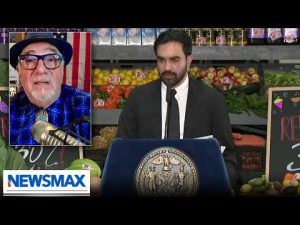
In the heart of San Francisco, a city often dubbed the “woke capital of the United States,” a storm is brewing over the rising tide of what some are calling a “communist takeover.” This whirlwind of controversy revolves around a controversial figure, often referred to as “Mom’s Dummy,” who appears to be following a playbook straight from the Communist Manifesto. While this name may sound amusing, the implications are anything but. Dr. Michael Savage, a keen observer of current events, took to the airways to share his thoughts on this unsettling trend.
Dr. Savage painted a vivid picture of what happened when co-op grocery stores were tried in San Francisco back in the 1970s. He recalled that the attempt to create community-owned stores ended in disaster due to rampant theft and the filthy conditions that seemed to prevail. Savage warned that the same fate awaited cities like New York if the current leadership continues down the same path. To him, the situation isn’t just a local issue; it’s a precursor to a broader assault on individual freedoms and property rights.
Mom’s Dummy, as Savage refers to him, is described as a puppet whose strings are pulled by a filmmaker mother. This imagery evokes the Greek myth of Icarus, who soared too high and ultimately crashed down when his wax wings melted in the sun. Dr. Savage hopes for a similar downfall, understanding that while such comparisons provide a bit of dark humor, the underlying issues are serious. He contends that this individual has crafted a hit list targeting successful property owners, suggesting a push to publicly shame or harass them under the guise of taxation and property control.
In Savage’s opinion, the goals of these policies align frighteningly well with the tenets of the Communist Manifesto. The talk of eliminating private land ownership and confiscating property strikes at the very heart of American values. Savage indicated that the policies being implemented are not sudden but rather creeping in gradually, encouraging the public to recognize what they had reportedly signed up for at the polls. Surprisingly, he noted that a significant portion of the constituents—from some strange, foggy place of confusion—remain oblivious to the political reality they have enabled.
Moreover, Savage’s argument takes an even bolder turn when he mentions the Communist Control Act of 1954, a relic of the Eisenhower era intended to push back against communist influences. According to Savage, this law still holds relevance today, offering a potential legal route to deport Mom’s Dummy alongside those he perceives to be complicit. It’s a dramatic call to action that paints a stark image of a nation not just under political duress but facing existential threats.
In wrapping up this problematic portrayal of contemporary politics, there remains a tension between preserving individual freedoms and navigating the often murky waters of political ideologies that masquerade behind more palatable monikers. Dr. Savage’s commentary may seem extreme to some, but it emphasizes an urgency in recognizing the changes occurring around us. Whether in San Francisco or New York, the implications of these policies could ripple outwards, challenging the fabric of American society. The question now lies in how citizens will respond to these unfolding narratives, as the stakes have never been higher.