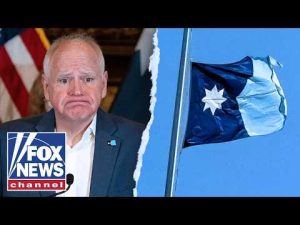
In the absurd world of politics and judicial decision-making, the news from Minnesota comes as a weirdly fitting addition to the ongoing saga of public misunderstanding and mismanagement. Recently, the state has been rocked by a staggering Medicaid fraud case involving a sum of $11 million. Yes, you heard it right—$11 million. One might wonder how on earth such a chunk of cash disappears like socks in a dryer, but in the labyrinth of bureaucracy, these things tend to occur more often than one might think.
For instance, take the defendant Sed Ail Ibrahim, who somehow managed to secure a plea deal with the help of the state’s Attorney General, Keith Ellison. They conveniently dropped some serious charges in exchange for a sweet deal of supervised probation. So, Mr. Ibrahim gets to skip jail time, all while whispering sweet nothings like, “We’ll party, bro,” to his accomplices about hit-and-run frauds. Sigh. What a wonderful world where accountability seems to have a knack for missing the target.
Then there’s the tale of the alleged mastermind, Abd Rashid Ismael Say, who seems to have taken an impromptu holiday to Kenya. Despite clear warnings about his high flight risk, Judge Juan Hyos thought it was a great idea to let him out on a $150,000 bail. Just a drop in the ocean compared to the millions involved, right? Oh, and of course, let’s not forget the cherry on top—letting him hang onto his passport as if it were his golden ticket to wanderlust. This move sent experts, and probably law enforcement, into a frenzy of collective facepalms.
Republican Minnesota Senate candidate Michelle Tafoya passionately highlights the frustration brewing among Minnesotans. The people aren’t just upset; they’re exasperated by this lax approach to justice. The good folks are tired of their hard-earned tax dollars being treated like Monopoly money and are calling for a massive overhaul in accountability. Letting an international fraudster slip away scot-free deserves nothing less than its own comedy sketch, but somehow, it’s their reality.
In Minnesota, the magical land of 10,000 lakes, you’d think clarity would reign supreme like the crisp, clean water they’re known for. Yet the continuing trend of governmental blind spots, especially with staggering fraud amounts like the infamous $250 million “Feeding Our Future fraud,” paints a different picture. According to some, there’s an undercurrent of whispers and nods, people in-the-know choosing to look the other way. Apparently, pointing this out might get you branded as a conspiracy theorist with a penchant for over-imagination.
As election time approaches, Minnesotans might just want to reflect on whether they’re satisfied with the status quo or eager to steer the ship back towards sanity. One thing is clear—voters are presented with a golden opportunity to voice their dissatisfaction through the ballot box. November is their chance to make a change, and perhaps Minnesota can save itself from becoming the new emblem of judicial whimsy.