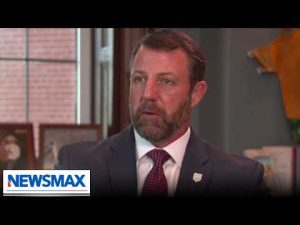
In a scene that could easily be mistaken for a high-stakes drama, tensions are brewing inside the hallowed halls of Congress. Secretary Mark Wayne Mullen of the Department of Homeland Security recently opened up about the challenges faced by Immigration and Customs Enforcement (ICE) officers as they confront lawmakers who seem to be playing a dangerous game with the nation’s safety. The latest twist came from Congresswoman Monica Lyver, who found herself in court battling charges stemming from her aggressive behavior toward federal officers. And what’s more, she represents a growing faction of radical Democrats pushing for policies that could significantly undermine law enforcement.
Mullen is not shy in expressing his discontent with what he terms “radical Democrats,” who, in his view, have hitched their wagons to the dangerous ideology of defunding vital law enforcement agencies, including ICE and the police. This isn’t just a casual policy suggestion; it is a movement backed by some members of Congress who are entangled in a narrative that suggests open borders should be the new norm. Meanwhile, Mullen emphasizes that ICE acts within the law, merely enforcing the statutes set forth by Congress itself. Ironically, while he upholds the law, Congress hasn’t meaningfully updated immigration laws since 1959, which raises the question: Are they too busy squabbling among themselves to tackle this pressing issue?
Highlighting the urgency of the matter, Mullen noted that ICE had been out of action for nearly four months due to a government shutdown, a period where immigration enforcement lagged alarmingly. Of course, the most unnerving aspect of this shutdown is that during this time, ICE and Customs and Border Protection (CBP) weren’t just sitting idly. These agencies are spearheading efforts internationally to stem the tide of illegal crossings and curb drug trafficking before it even reaches American soil. Yet, when funding dwindles, so too does their effectiveness.
Mullen’s fervor for the job is evident as he details how many federal agents have been working unpaid, with some having to send their families back to their home countries simply to make ends meet. Their commitment to national security is admirable but also raises eyebrows about the support they receive. According to Mullen, these agents are some of the most dedicated patriots and would do the work without pay—as they often have to—which is both a testament to their dedication and a glaring indication of systemic issues plaguing federal funding.
But it is not all doom and gloom for Mullen and his team. With building techniques that even the most seasoned construction workers would admire, the Secretary proudly announced the progress on the border wall. Contrary to the narrative that it would never happen, Mullen mentioned that the wall is indeed proceeding, with advancements that include technology to monitor criminal activity effectively. And if that weren’t enough, Mullen eagerly teased the discovery of a tunnel that could potentially aid traffickers, a telltale sign that they’re adapting to the new, more secure measures.
In this comedy of political errors and high-stakes maneuvers, what remains clear is that the battle over national security is not just a matter of enforcement, but a complicated web of legislative gridlock and administrative challenges. With Mullen’s passion sounding like a battle cry for law and order, one might wonder if Congress will finally step up to the plate and reform outdated immigration laws or continue to play politics at the expense of security. As the dust settles, one thing is certain: the dialogue on immigration law and enforcement is far from over, and our nation’s safety hangs in the balance.