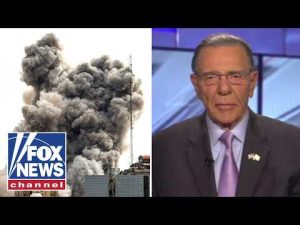
In the latest chapter of international tensions, President Trump is evidently delivering a commercial lesson to Iran, with a slew of strategic strikes that are making headlines. The operation, a potent mix of military might and sharp tactical planning, has disrupted Iran’s infrastructure, leaving an unmistakable message about the importance of control over key waterways. Iran’s coastline is taking quite the beating, and it appears that’s just the prelude to a grander strategy. Power has been cut, bridges have been obliterated, and Iran’s supply lines are in tatters. It’s infrastructure week in Iran, indeed—but unlike the typical road repair, this one comes courtesy of American firepower.
The strategic move has not only targeted logistics but also Iran’s ability to retaliate. Key railway stations that were once bustling with over 100 million tons of cargo—much to the delight of China—have been reduced to rubble. That alone speaks volumes about the operation’s ambition to stifle Iran’s economic pulse. Meanwhile, the blockade in the Gulf of Oman seems tighter than a budget airline seat, with Marines ensuring no vessel slips through unchecked. Iran, it seems, may have miscalculated the line of invincibility they touted, as that red line now appears to be little more than a faded chalk mark under the weight of American resolve.
What’s fascinating is the operation’s multilayered approach. Besides tactical airstrikes and pinpoint attacks, there’s an unmistakable focus on dismantling Iran’s command structures and air defenses. Iran’s missile and drone sites are being systematically neutralized, which does come across as an organized form of “spring cleaning.” This sweeping effort isn’t just flexing military muscle but also ensuring that the Strait of Hormuz—an artery of global oil supply—remains unimpeded. Despite their bravado, if Iran couldn’t control the strait, their dreams of geopolitical dominance would remain pipe dreams.
Yet, this isn’t just about military superiority; it’s about sending a message—and not the kind that requires a stamp. The operation underscores a determination to deny Iran any form of strategic leverage, especially in the Gulf region where oil flows like the morning coffee in corporate America. President Trump’s approach might seem severe, but when dealing with a regime that’s repeatedly shown it prefers missiles over amicable chat, tough action sometimes speaks louder than words. The administration, it appears, is drawing the line on the Persian rug, making it clear that peace was given a chance, and now it’s time to end the ongoing charade.
As the operation wears on, there’s little doubt that the folks in Tehran are feeling the heat. With much of their retaliatory capability on the chopping block, their calculations now center around survival, not dominance. The president seems resolute on expanding the operation until the regime realizes that it’s playing a high-stakes game in which the deck was stacked against them. If anything, this situation rings true to the old adage: never bring a knife to a gunfight—especially when the other guy’s wielding precision strikes. It’s a painful game they’re in, and it appears that the only thing Tehran’s leadership might be decapitating is their own hopes of a peaceful resolution.