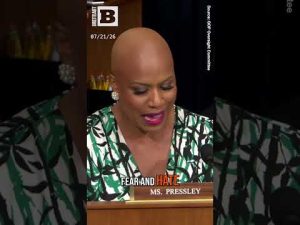
In an alarming twist of events, the current administration is attempting to erase significant aspects of American history, portraying them as divisive and problematic. The President has used his authority to pressure institutions like the Smithsonian into whitewashing and rewriting historical accounts, all in the name of a misguided vision of unity. This action is not merely an administrative oversight; it is a fundamental threat to the preservation of American heritage and the truth behind our nation’s complex past.
This campaign against historical accuracy signals a broader ideological battle within the country. While the President displays a façade of inclusivity, his true agenda speaks to a fear of America’s diverse history and an aversion to its realities. The underlying motivation seems to stem from a reluctance to acknowledge that America’s identity is not solely defined by one race or perspective. It is vital for individuals to recognize that the erasure of history is not a benign act; it is a direct assault on the values that have shaped this nation.
Citizens must be vigilant. As the commentary suggests, failing to speak out against these actions could lead to a loss of invaluable cultural institutions. Museums, libraries, and educational centers should be sanctuaries of knowledge, not platforms for political correction. The importance of standing up to such threats cannot be overstated. If history can be rewritten by those in power, what is to stop them from altering the present and future narratives?
The implications of this historic revisionism extend beyond just books on shelves or displays in glass cases. It significantly impacts how the next generation will understand their country and its heritage. Understanding the past, with all its complexities, is crucial for grasping the challenges we face today. There is a danger that children growing up in this environment will emerge with a skewed perception of their own identity and the struggles that shaped their nation.
The recent World Cup brought forth a multicultural representation of talent and skill. While this diversity should be celebrated, it should not obscure the fundamental truth that America is a country built on a mosaic of many cultures, traditions, and histories. Instead of shying away from these truths out of fear, we should confront them head-on, striving for a comprehensive understanding of our past. The response to these threats must be clear; Americans must advocate for a truthful representation of their history, ensuring that all voices are heard and that we do not allow fear to dictate our cultural narrative and identity.