In a world increasingly filled with questionable decisions made by global organizations, it seems the United Nations has outdone itself yet again. Perhaps the ultimate irony was revealed when the UN appointed Iran, a country notoriously at odds with international norms on nuclear proliferation, as vice president of its nuclear non-proliferation conference. It’s akin to asking a fox to guard the henhouse. Such an absurd move leaves one wondering if the UN is operating in a parallel universe where right is wrong and down is up.
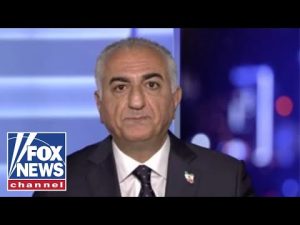
Adding a dramatic twist to this international conundrum, the Crown Prince of Iran, Reza Pahlavi, has weighed in on the situation. He’s suggesting that the people of Iran need to be armed to reclaim their country. While that may sound extreme to some, it’s hard to argue against the idea considering the horrific events of early January, where 40,000 lives were lost in a senseless massacre. The current Iranian regime should have been awarded an Oscar for Best Villain long ago, given its unabated war-mongering and terrorist activities, ensuring the country remains isolated and economically unstable.
Meanwhile, the pressure on Iran continues to mount as internal struggles manifest in the form of power grabs between hardliners and moderates. It’s a classic case of rearranging deck chairs on the Titanic. The Trump administration’s stern stance against Iran’s nuclear ambitions further complicates this picture, rendering Iran’s dream of being a nuclear power a non-starter. With the country’s oil storage reaching capacity and the looming necessity of capping its oil wells, it’s difficult to imagine a scenario where Iran carries on with business as usual.
However, anyone cautiously optimistic about a possible collapse of this regime might want to hold their horses. Despite being put under massive pressure, the Iranian regime, with its creativity in refusing to stay down, continues to cling on to power through sheer repression. It’s an unsustainable strategy—inflation is through the roof, their currency is worth less than the paper it’s printed on, unemployment is rampant, and there’s a potential gasoline shortage on the horizon. Sooner or later, this house of cards will tumble.
Reza Pahlavi and others engaged in this struggle assert that coordinated efforts—both from inside Iran and from international allies—are necessary to bring about meaningful change. As long as this regime is allowed to continue its narrative of revenge and ideological exportation, as it prances through the political landscape like a toddler in a tantrum, a legitimate sigh of relief is going to remain elusive. Thus, it’s essential that the international community remains committed to supporting the Iranian people’s aspirations for freedom and an end to tyranny.