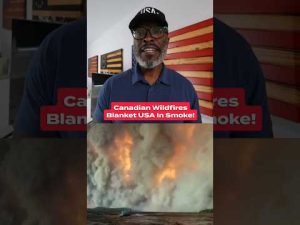
As Canada experiences a staggering 672 wildfires, the consequences are impacting everyday life in the United States. The air quality has deteriorated in several American cities, causing significant concern. From New York to Washington, DC, Americans are experiencing the effects of thick smoke and haze, changing the skyline into an unnatural sight. Detroit has notably been classified among the worst cities for air quality due to the smoke from these fires. This widespread issue raises the need to address environmental emergencies thoughtfully.
The vastness of Canada’s forests and small population make it challenging to address these fires effectively. With over 80% of Canadians living near the US border, fires located in untouched regions are left to burn naturally until winter conditions help extinguish them. As a result, Americans must brace for weeks, possibly months, of adverse air quality. The infusion of smoke and weather patterns leads to contaminated air passing over us, which poses a potential health risk.
One might think the smell of smoke resembles a campfire or a fireplace, but this situation is different. The breakdown of smoke particles by the sun results in a complex mix of chemicals such as benzene and formaldehyde finding its way into our air. This chemical concoction is unsafe and should not be taken lightly. Families and individuals need to consider practical solutions, like staying indoors during high-smoke days, investing in air purifiers, and taking preventative health measures.
It is a fitting reminder that environmental issues do not adhere to borders. The work lies in collaborative efforts on international levels to find long-lasting solutions. However, this does not mean relinquishing personal responsibility. Households should be proactive by keeping themselves informed and prepared for air quality advisories. This is about exercising common sense and considering the impact of daily activities on personal well-being.
In times like these, it is essential to balance awareness with action. While global events like these fires may be out of individual control, how one reacts is within their power. Taking steps to protect one’s health while promoting efficient and realistic policies is part of the collective responsibility. Americans have always risen to the challenge, and this time should be no different, continuing to safeguard the values of security and resilience.