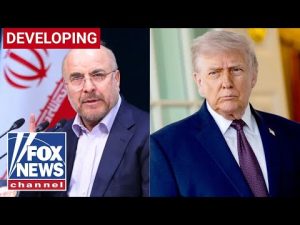
As the world turns, the chessboard of international politics gets more complex, and our eagle-eyed commander-in-chief is always on the lookout for the best strategic moves. This time, the focus is on Iran, where things have taken quite the turn. Once a theocracy, it seems Iran has now embraced its darker nature and transformed into a full-blown “thugocracy.” Who knew that the Ayatollah, who once stirred fear, would become a side character in his own country? The Iranian Revolutionary Guard Corps (IRGC) has taken the reins and is now driving the nation with a heavy hand. Lucky for us, the United States, options are at the ready to counter this new regime.
Apparently, there’s quite the checklist of targets should the president and his team decide to take action. It’s like they’re shopping at the local “get tough on Iran” mart. But in all seriousness, these military decisions are about ensuring Iran doesn’t get its hands on any nuclear weapons – because that’s the kind of surprise nobody wants at their front door, especially with unstable neighbors. The commander-in-chief, with a steady hand and a keen eye, has been pretty spot-on with his foreign policy decisions so far – at least that’s the word on the street or, well, in certain conservative circles.
There’s also talk about a blockade that’s making Iran feel like it’s in a pressure cooker. Some say to keep it sealed tight until it pops, while others advise giving it a little nudge to see if they’ll come back to the negotiation table. It’s all about timing, folks – hitting them where it hurts the most and when it counts. If Iran wants to pretend it’s a big player with nuclear aspirations, the U.S. seems more than ready to serve a reality check on a silver platter.
Looking outside just our relationship with Iran, the president is shuffling more pieces on the global oil chessboard. With movements from countries like Venezuela and the UAE pulling out of certain deals, there’s more at play here than just taking down Iran’s nuclear ambitions. It’s about crafting a better world – or at least, a world that doesn’t let Iran bully others with nuclear threats. Nobody wants to deal with a nuclear neighborhood bully, especially not our “friends” who have invested in AI technology they’d rather not see turned against them.
Ground assaults or airstrikes? That’s the million-dollar question when it comes to how the U.S. might address the situation. So far, airstrikes seem like the preferred tool – more precise and less boisterous than boots on the ground. It’s also amusing to see the U.S. reevaluating its friendships in the region. Pakistan, long considered a dubious ally, might just get the cold shoulder in favor of buzz-worthy partners like the UAE. Whatever steps are taken, the plan is clear: stop Iran’s influence in the Middle East and keep the Strait of Hormuz open for business. A hard line? Oh, absolutely. But at the end of the day, someone has to keep the chess game fair and square. Let’s see how it plays out.