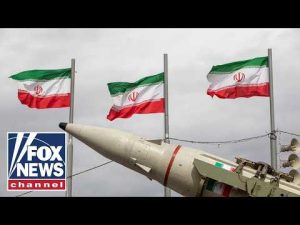
The Middle East is once again at the center of global attention, with tensions escalating between the United States and Iran. After four consecutive nights of strikes, the situation seems to be teetering on the edge of something much larger. CENTCOM has confirmed that U.S. forces, including fighter aircraft, drones, and naval vessels, have been engaging in targeted attacks. These actions are aimed at diminishing Iran’s missile and drone capacities, naval abilities, and coastal defense systems. This military operation lasted seven hours and was conducted to curb Iran’s capability to threaten commercial shipping lines and civilian crews—a mission that sounds a lot like trying to stop a nasty neighbor from tossing trash into your yard.
Meanwhile, Iran responded by attacking U.S. bases in Jordan, Kuwait, and Bahrain. It’s a classic international tit-for-tat that might seem like an unfortunate yet inevitable global game of chess. In an act of strategic pressure, the U.S. has implemented a naval blockade on all Iranian ports. The president has been vocal about his willingness to escalate the military campaign if Iran remains uncooperative, seemingly channeling his inner “tough guy” demeanor, asserting that if Iran refuses to negotiate, they might soon find themselves sitting in the dark, quite literally.
The president has made it clear he’s not particularly keen on sending troops for a ground campaign, explaining that the U.S. has alternatives for such operations. A somewhat theatrical promise has been made that if Iran doesn’t play ball, next week could see strikes on power plants and bridges, promising to bring Iran’s infrastructure to its knees. Who needs light and transportation anyway, right? It’s a reminder to Iran that when you’re handed a bad hand, you better find a way to make a friendly deal.
Amid these developments, the president summoned his top national security team for a meeting in the situation room. The array of attendees includes Vice President J.D. Vance, Secretary of State Marco Rubio, and War Secretary Pete Hegseth. As if plucked straight out of a politically charged action movie script, they discussed strategies for future strikes on critical Iranian sites, including those in the strategic Strait of Hormuz. One point of interest is Iran’s Pickaxe Mountain, a fortified nuclear site. Experts suggest this target is all but impenetrable to the famed bunker buster bombs. Still, the possibility remains that it could be a target if any suspicious activity stirs up.
It seems that in today’s complex world of geopolitics, every move on the international board is a potential newscast waiting to happen. So, as the U.S. and Iran both rattle their sabers, the world watches with bated breath, hoping for a peaceful resolution but buckling up for whatever comes next. Stay tuned, folks—this isn’t the last we’ve heard of this melodrama on the global stage.