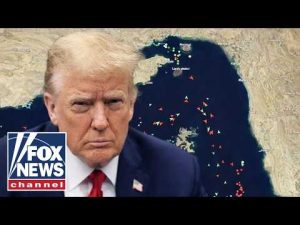
In what feels like a scene out of a geopolitical thriller, the United States has taken decisive action against Iran as their relationship hits yet another rocky patch. This time, it’s all about some good old-fashioned brinksmanship in the ever-volatile Strait of Hormuz. The situation involves the U.S. military launching retaliatory strikes on Iran in response to an Iranian attack on a commercial cargo ship. True to the classic tale of tit-for-tat, these strikes targeted coastal radar sites and missile and drone storage locations, giving Iran a firm reminder of Uncle Sam’s might. In a move that could very well be called “Don’t hit us, or else,” Vice President J.D. Vance confirmed that the U.S. is making good on its promise to respond to violence with violence.
The Strait of Hormuz has long been a hotspot of international tensions, serving as a crucial maritime route for oil and gas. It appears that after the ink barely dried on a peace deal, the situation is already heating up. According to the U.S. Central Command, four strategic targets on Iran’s coastline and Qeshm Island got a taste of American firepower. The initial offense by Iran, a strike on a Singapore-flagged cargo ship, was seen as a flagrant violation of a memorandum that was supposed to safeguard commercial vessels. But as history often teaches, trust isn’t easily built, especially when it involves the regime in Tehran.
Not to be outdone in the retaliatory department, Iran’s Revolutionary Guard has claimed they too decided to give the U.S. something to think about. They issued a statement threatening broader responses should American “aggression” continue. Bahrain, caught in the middle of this dispute, reported that it was caught in the crossfire, dodging drones and curses, undoubtedly further complicating this diplomatic dance. It seems the whole region is holding its collective breath as tensions escalate with Tehran boldly asserting its right to fight back.
Despite this latest flare-up, hope springs eternal, or so the optimists in the White House hope. The fragile peace deal somehow remains intact, teetering like a tightrope walker across political fault lines. While quiet whisperers in Washington anticipated clashes like this, there is still a commitment, at least for the time being, to maintaining this delicate agreement with Iran. One might imagine the White House officials sitting around, crossing their fingers, and hoping the next headline won’t be a declaration of all-out war.
It’s clear that the markets, and probably the world, are keeping a nervous eye on the Strait of Hormuz and the continual antics of Iran’s leadership. This latest episode serves as a timely reminder of how quickly peace can turn into a precarious balancing act. With both nations seemingly stuck in this cycle of retaliation and response, the world watches, and one can only wonder what their next move will be in this high-stakes game of international chess.