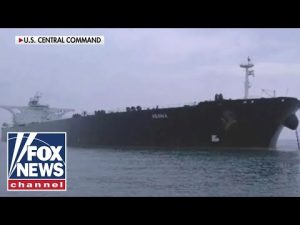
It seems there’s never a dull moment when it comes to tensions with Iran, especially now with an American fighter jet making headlines by dealing with an Iranian oil tanker in the Strait of Hormuz. It’s like a scene so outlandish you might expect it in a blockbuster film, yet here we are discussing it in the realm of real-world geopolitics. Apparently, the U.S. saw the tanker making its merry way toward an Iranian port, raising flags faster than a six-year-old can throw a tantrum when the ice cream truck drives by without stopping.
The U.S. military, doing what they do best, issued a string of warnings to the Iranian vessel, only for these calls to fall flat like a bad joke at Thanksgiving dinner. The tanker was in violation of a blockade, they announced, and presumably the Iranian crew either didn’t get the memo or simply decided to change the channel. In true Hollywood fashion, the U.S. decided enough was enough and disabled the tanker’s rudder. The message was clear: you play by our rules, or you don’t play at all.
Meanwhile, there’s chatter that a new deal might be in the works, with both sides attempting yet another diplomatic square dance. The president, never one to shy away from a media sound bite, expressed cautious optimism about the situation. But let’s be honest, optimism in diplomacy can sometimes be akin to hoping for sunshine in the middle of a hurricane. It’s not that one shouldn’t hope, but maybe have a good umbrella at hand just in case.
The ongoing blockade appears to be a formidable wrench in Iran’s economic gears. It’s like forcing a fire-breathing dragon to sip soup through a straw. Not impossible, but awfully inconvenient. This might be pushing Iran to the negotiation table, as they’ve had to rework their economic logistics like a kid forced to do math without a calculator. Now, whether this will result in a groundbreaking deal or just another chapter of hollow promises remains the million-dollar question.
Talks of future agreements revolve around some heavy issues, from nuclear enrichment to leverage in the Strait of Hormuz, with Iran surely playing their best hand – or at least thinking they are. The administration, of course, is riding high on its current leveraging success, and sees no reason to concede more than necessary. It’s a high-stakes poker game, with both sides trying hard not to let a tell slip through. As the president gears up for a trip to China, Iran’s biggest oil customer, one has to wonder if this geopolitical chess match will ever reach a checkmate or continue to be just more international grandstanding.