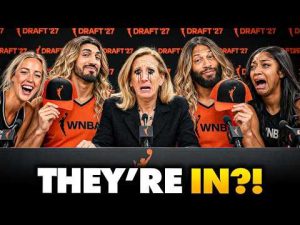
In the latest saga of the WNBA’s ongoing identity crisis, the league has found itself in a rather awkward position—it can’t seem to define what a “woman” is. This dilemma was brought to a head when a couple of former NBA players, citing the league’s lack of a clear definition, threatened to sign up for the WNBA draft. This bold move highlights the rollercoaster ride that can occur when progressive ideals meet the unyielding realities of biology and public opinion.
The plot thickened with the league’s most popular player expressing discomfort about potentially facing biological men on the court and sharing locker rooms with them. Her candid comments put a spotlight on the debate, stirring up quite the frenzy both on and off the hardwood. The resulting brouhaha has led to heated disputes amongst players, with some advocating for mixed-gender teams and others backing the traditional all-female structure. As it turns out, the league is caught in a bind as surveys indicate a substantial portion of Americans oppose the idea of men competing in women’s sports.
As the league attempted to sort this out, a meeting was convened, presumably to resolve what now seems like a puzzle from a logic-defying realm. However, this gathering resulted in nothing more than a drawn-out debate with no resolution in sight. Think of it as a group of top chefs arguing over the ingredients for a dish but ultimately failing to cook anything at all. The meeting wrapped up with the decision to meet again, leaving the WNBA still at square one, unclear on precisely who qualifies to play.
Simultaneously, the humorous side of this theater is hard to ignore, as discussions around whether masculinized athletes already play in the league have surfaced. The conspicuous absence of a firm definition of womanhood has at least got people chuckling, and perhaps questioning how serious the league is about maintaining women’s sports. The thought is both amusing and provoking, as many wonder if the absence of clarity might mean men are already inadvertently part of the game.
Amidst all the comedy (or tragedy depending on one’s view), there’s an underlying message loud and clear—the WNBA is wrestling with its identity, teetering on a ledge between inclusivity and the preservation of women’s sports. It’s a gripping chess game that they will eventually have to navigate wisely or risk losing the support of the majority. While this scenario unfolds, sports fans are left with a front-row seat to this intriguing saga, eagerly watching how the WNBA will finesse its way out of this self-made conundrum.