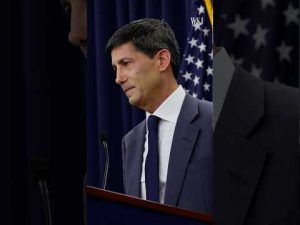
In a riveting display of accountability and frustration, Republican senators confronted Dr. Anthony Fauci during a recent hearing, igniting a firestorm of questions regarding his actions throughout the COVID-19 pandemic. A curious spectacle unfolded as the former White House chief medical advisor faced lawmakers under subpoena, only to invoke the Fifth Amendment a staggering 111 times. This raised eyebrows not just among politicians, but also within the medical community. Dr. Fauci, once hailed as a beacon of knowledge in public health, now stands accused of destroying federal records and misleading the public.
As the senators took their turns interrogating him, it became more apparent that many feel the former director of the National Institute of Allergy and Infectious Diseases (NIAID) has dodged accountability. Some questioned how he could so easily slip away from admitting the truth. With the evidence of email deletions and misguided recommendations hanging heavily in the air, the frustration was palpable. In particular, one senator expressed exasperation at the audacity of Dr. Fauci, asking rhetorically who he thought he was for disregarding the inquiries.
Backing the congressional investigation was Dr. Drew Pinsky, a familiar face in the medical world, who didn’t shy away from expressing his disbelief at Fauci’s actions. Dr. Pinsky emphasized the deep impact of Fauci’s recommendations, noting that many politicians followed his advice without question, leading to untold hardships and interruptions in the lives of countless Americans. The dangerous notion that the virus’s elimination justified the harm caused to individuals seemed to indicate a troubling trend in the medical community’s approach to public health.
Dr. Pinsky also took a moment to critique Fauci’s relationship with the media. During the pandemic, Fauci did not just relay information; he was often a charismatic figure leading nearly daily updates, dining with journalists, and becoming a celebrity in his own right. This interaction with the media, according to Dr. Pinsky, might have compromised his professional judgment, which should have prioritized public safety over personal fame. The allure of being in the limelight, he suggested, can cloud a doctor’s primary duty: to do no harm.
While the hearing questioned Fauci’s actions during an unprecedented crisis, it brought to light a broader concern about trust in scientific leadership. There were discussions on the need for transparency and accountability from public health officials. The reality is, in times of crisis, clear communication is essential, and when experts like Fauci falter, it shakes public confidence. With rising skepticism towards authority figures in medicine, the question persists: How can we rebuild trust in health guidelines moving forward?
As we look to the future, the consensus appears to be that if another pandemic were to arise, we must never again prioritize emergency measures above individual rights. The lessons learned from the COVID-19 experience must not be forgotten, and accountability should be firmly established. Doctors must be capable of advising the public without stripping away the fundamental freedoms that every American holds dear. The very foundation of trust in public health relies on transparency—one hope remains: that lessons learned today will foster a more honest and healthy relationship between the public and medicine in the years to come.