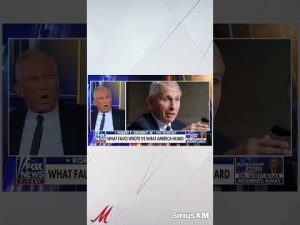
In a political landscape often swirling with half-truths and misdirection, Robert F. Kennedy Jr. stands out as a figure unafraid to wade into controversy with what he sees as the unvarnished truth. Known for his fearless approach and unyielding commitment to his principles, Kennedy has once more embarked on a bold criticism of health agencies and their handling of vaccine side effects. During a recent appearance with news commentator Laura Ingram, he made claims that have sparked renewed conversations about transparency and accountability in public health.
At the heart of Kennedy’s argument is a startling revelation from the diaries of Dr. Anthony Fauci, a prominent figure during the pandemic response. According to Kennedy, these diary excerpts, now mysteriously vanished from public view, disclose an episode that raises eyebrows. Dr. Fauci reportedly experienced a pulmonary infarction, a possible adverse event ascribed to the vaccines, something that was kept from the public. The revelation that such a significant health incident occurred and was known to Fauci yet allegedly suppressed places a spotlight on issues of public trust and governmental transparency.
Kennedy’s assertion hinges on the notion of accountability. While many view the vaccines as life-saving tools in the pandemic, Kennedy’s perspective touches a nerve, especially with those wary of institutional power. The question he raises isn’t strictly about the efficacy of the vaccine itself; instead, it’s about whether all potential risks were transparently communicated to the public. Kennedy suggests that Fauci, a figure who played a paramount role in guiding public health policies, might have known privately about the risks yet failed to fully disclose them to a trusting populace.
The implications of these claims are not small. If true, they suggest an erosion of trust between public figures and citizens. People expect—and deserve—to be armed with full knowledge to make informed decisions about their health. Kennedy’s insistence on exposing these diary entries challenges the current narrative and forces individuals to reevaluate what they know about the pandemic’s handling. Are the folks tasked with safeguarding public health operating with full transparency, or are certain truths being hidden under the veil of authority?
With these revelations, Kennedy is seemingly advocating for more stringent scrutiny of those in power. By calling attention to these inconsistencies, he demands higher standards from leaders and advocates for the public’s right to know. His bold approach serves to remind the public of the importance of questioning and holding accountable those in positions of power, ensuring that truth is not a casualty in the pursuit of public safety. In a time when misinformation runs rampant, Kennedy’s fearless quest for clarity serves as a call for diligence, demanding nothing less than full honesty from those we entrust with our health decisions.