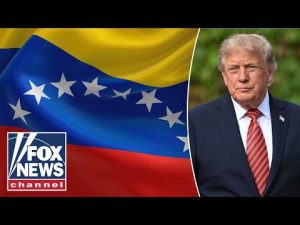
In a world that’s constantly shifting, some constants remain the same: politicians playing chess with geopolitics and oil deals being struck with dubious leaders. This week’s drama unfolds at the United Nations General Assembly where President Trump met with Venezuela’s interim president since the fall of Maduro. With gasoline prices creeping higher than a cat on catnip, the administration is finalizing a significant oil pact with Venezuela. More than ever, the political font is dripping with irony as they brew this contentious concoction. Let’s not pretend we didn’t chuckle at the idea of striking deals with a leader who’s as popular with her constituents as homework is to kids.
Now, onto our conservative soap opera starring Deli Rodriguez, the interim dictator with a knack for souring moods and a blood-stained ledger. Picture a narrative where this mastermind of disaster, who once danced to Maduro’s repressive tunes, becomes key to evening out global oil prices. Behind the scenes, she’s portrayed like a marionette nodding in agreeance but slyly crossing fingers behind her back. Senator Bernie Moreno, bless his bluntness, isn’t buying her motive merchandise for a second. There’s finger-pointing, and caution speeches being thrown around like free T-shirts at a baseball game, reminding President Trump that it’s best not to dance with wolves.
Yet, even with these cautionary tales and historical narratives hanging overhead like an overcritical in-law, the nation barrels toward a deal— a deal that risks shaking hands with someone who might pull out the hand sanitizer soon as the cameras cut. But the conservatives are smart cookies—they know Venezuela’s self-inflicted wounds won’t heal overnight. Infrastructure of repression still looms over the country like a particularly unpleasant shadow, ever resilient despite opposition outcry. To many, this feels like duct tape over a bigger problem—a temporary fix for a permanent need of stability.
The senator throws a curveball suggesting an election on the birthday of none other than Simón Bolívar. Setting such a date evokes the symbolism of liberty akin to adding sprinkles to a donut—it makes the idea of restoration a tad more palatable. It’s touted as a move to bring legitimacy and a chance for the Venezuelan people to one day stop walking on eggshells. Skepticism, however, abounds as Senator Moreno reminds everyone how swiftly things could unravel without proper vigilance.
With leaders like María Karina Machado potentially braving the lion’s den by returning to Venezuela, we’re posed with an intriguing question—will her return serve as a catalyst for change or a mere blip on the radar? Her boldness seems to be pushing the powers that be to prove their strength or reveal their inevitable frailties. Meanwhile, the general hopeful spirit is likely fueled by the potential payoff from the oil deal, promising growth opportunities dangling like a golden carrot. Truly, these are pressing times in which the groundwork for future stability is being laid with all the subtlety of a sledgehammer.