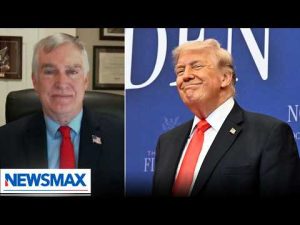
There is a lot happening in the world of international relations, and recently, President Trump made headlines by announcing the withdrawal of 5,000 troops from Germany. This move comes as a part of a larger conversation about America’s global military presence and its strategy in facing threats, particularly from Iran. The timing of this announcement certainly raised eyebrows and sparked a lot of discussions about what this could mean for both Europe and the Middle East.
Now, let’s take a closer look at the backdrop of this troop withdrawal. The United States currently has around 36,000 troops stationed in Germany, a number that includes not just soldiers but also airmen. When the President talks about pulling out a couple of thousand of these brave men and women, it is significant but not a complete withdrawal. It sends a clear message to Germany and the world about the current state of U.S. military strategy. Besides, the Chancellor of Germany, Olaf Scholz, has been rather vocal in criticizing the Trump administration, which only adds fuel to the fire of this military maneuver.
There are concerns about the implications of troop reduction in Europe. Is Russia, led by Vladimir Putin, gleefully rubbing his hands together at the sight of fewer American soldiers on the continent? Some experts have voiced skepticism about the benefits of reducing the U.S. military footprint in Europe, highlighting the potential for increased aggression from Russia if NATO is perceived as weaker. After all, a strong alliance is sometimes considered a deterrent against aggressive nations. Despite these concerns, it looks like the President’s focus is on repositioning troops rather than an outright exit, leaving room for debate among lawmakers on Capitol Hill.
In addition to moving troops around, the President has made it clear that he seeks a significant win in Iran. With previous successes in military operations against the Iranian regime, he has seemingly set the bar higher for what constitutes victory. The desire for a grander achievement appears coupled with the hope of fostering an uprising among the Iranian people to choose a path toward democracy. The conversation paints a picture of a grand game of chess, where strategies unfold beneath the surface, and alliances shift much like pieces on a board.
While some argue for open diplomatic negotiations, doubts remain about who exactly the U.S. would be dealing with. The Iranian leadership isn’t exactly known for its consistency or reliability. Reports suggest that even during talks, factions within Iran can’t seem to agree. There’s talk of bickering diverting more time than actual negotiations. Given the complex dynamics, some experts remain skeptical if a successful negotiation is possible in the long run without further action to take down more radical leaders.
In summary, President Trump’s latest military moves—both in Europe and regarding Iran—are setting the stage for intense discussions in Washington and beyond. While the troop withdrawal from Germany serves as a powerful signal to European allies, questions about its broader implications linger. Meanwhile, the push for a decisive win in Iran reflects both confidence and ambition, as the administration contemplates the best course forward. One thing is for sure: these developing stories will be ones to watch closely in the months ahead.