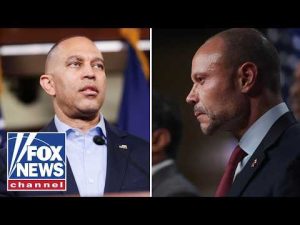
It seems like the halls of Congress were alive with drama and surprise once again, almost as if they were auditioning for a new political reality show. Imagine, if you will, an administrator walking into a congressional hearing thinking it would be just another day at the office. But this day took an interesting twist, turning into a spectacle that might even rival a high school debate team meeting, just with a bit more intensity.
A Democratic Congress member found themselves in quite the predicament. You’d think someone with experience, especially someone who once chaired the Appropriations Committee, would be well-versed in the major legal doctrines that influence government policy. But alas, it seems that some of our elected officials might have skipped their constitutional law homework. Two of the most critical Supreme Court cases concerning the EPA seemed to be unknown territory for a certain lawmaker. To say it snowballed from there would be an understatement.
The exchange quickly went from questioning to what appeared to be a lesson on the separation of powers. For those unfamiliar, the cases of Michigan v. EPA and West Virginia v. EPA are pivotal in discussions about how much power government agencies truly hold. But clearly, this was news to one former chair of the mighty Appropriations Committee. One might wonder if they were trying to set a world record for the number of times one can profess ignorance in a single session.
As the session progressed, the chaos didn’t let up, reaching a crescendo when weedkiller was thrown into the mix—figuratively speaking, of course. The debater on the other side, perhaps tired of the back and forth, quipped about drinking weedkiller, a suggestion one should never heed, for those both in and out of Congress. This verbal tennis match of absurdity only served to highlight how an essential conversation could devolve into a spectacle of alarming misunderstandings.
Meanwhile, another hearing featured its own batch of confusion with a different Democratic member, Rep. Rob Menendez, entering the scene. Unsurprisingly, this followed a similar comedic pattern, as questions about advertising campaigns and conflicts of interest flew. But this congressman seemed less interested in receiving answers and more intent on interruption—a strategy perhaps inspired by the latest debate techniques proliferating cable news.
It seems that the magic ability of some members of Congress to turn hearings into a series of faux paux is unabated. While it makes for entertaining viewing and even more entertaining commentary, it raises concerns about the awareness—or lack thereof—that individuals in significant positions hold regarding critical legislative and constitutional issues. As citizens, one hopes their representatives are as informed as they are vocal. But perhaps all this reveals is that our lawmakers might benefit from a crash course on government 101. Or at least a primer on a few pivotal Supreme Court cases.